Gallic Acid for Daily Skin Protection and Nighttime Repair
Skin in India deals with stress almost all day. Morning starts with humidity, heat, traffic, and dust. By afternoon, sweat and pollution settle on the face. Then comes repeated washing, indoor air conditioning, late nights, and lack of sleep. Most people think skincare problems begin with one issue, like dryness or dullness. Usually, the skin is reacting to constant environmental pressure instead.
This becomes more obvious with sensitive or reactive skin. A routine feels fine for a week, then suddenly the skin starts burning, looking red, or feeling tight for no clear reason. People switch products quickly after that. Some stop moisturizing. Others begin using stronger actives. The cycle repeats.
What often gets ignored is the need for support, not just correction. That is where gallic acid in skincare starts becoming useful. It does not work like an aggressive treatment ingredient. It supports the skin during daytime exposure and helps it recover at night without pushing the barrier too hard. For skin that already feels overwhelmed, that softer approach matters more than people expect.

What is Gallic Acid?
Gallic acid is a plant-derived antioxidant found in ingredients like green tea, grapes, berries, oak bark, and witch hazel. In skincare, it is known more for protection than exfoliation. It does not create visible peeling or immediate tightening. Instead, it helps reduce the effects of oxidative stress. That phrase sounds technical, but the meaning is simple. Oxidative stress is the damage that slowly builds from UV exposure, pollution, smoke, dust, heat, and environmental irritation. Skin in crowded cities faces this daily. Over time, the barrier becomes weaker, and the skin starts reacting faster to products and weather changes.
People often assume effective skincare must feel strong. Tingling, dryness, or peeling gets mistaken for results. This comes up more often than expected. Gallic acid works differently. It supports the skin quietly in the background. That slower approach is exactly why many people tolerate it better. Sensitive skin usually responds well to ingredients that work steadily without creating cycles of irritation and recovery.
Another reason people prefer gallic acid use is flexibility. It fits into routines without forcing major changes. Some active ingredients require careful spacing or recovery days. Gallic acid tends to work more comfortably alongside simple skincare habits.
Daytime Benefits of Gallic Acid
Gallic acid benefits during the day usually appear gradually:
- Helps reduce visible stress caused by pollution and heat
- Helps calm skin that reacts easily to weather changes
- Supports a more stable skin texture over time
- Fits into lightweight daytime routines comfortably
Protection rarely feels dramatic. Most people do not wake up one morning and suddenly notice “protected skin.” What usually changes first is discomfort. The skin feels less reactive. Redness becomes less frequent. Texture starts feeling calmer. This is why pairing antioxidants with sunscreen matters. Sunscreen in winter still plays an important role here. Many people stop using sunscreen once the weather cools down, especially during cloudy months. UV exposure continues even during winter, and sensitive skin still reacts to gradual damage.
Nighttime Benefits of Gallic Acid
Gallic acid supports nighttime recovery without overwhelming the barrier. Some noticeable nighttime benefits include:
- Helps calm irritation that builds during the day
- Supports recovery when the skin feels stressed or tight
- Works comfortably with moisturizers
- Helps maintain a steadier skin feel overnight
Many people notice improvement not through dramatic visible changes but through comfort. The skin feels less irritated in the morning. Cleansing stings less. Dry patches become less reactive. People miss this sometimes because skincare conversations online focus heavily on instant transformation. Healthy skin usually improves more quietly than that.
At night, simple routines tend to work best:
- Gentle cleanser
- Gallic acid product
- Moisturizer
How to Incorporate Gallic Acid in Your Daily Routine
Gallic acid works best when the routine stays simple and balanced. Most people do not need complicated layering.
Here is a practical comparison between morning and nighttime routines using gallic acid:
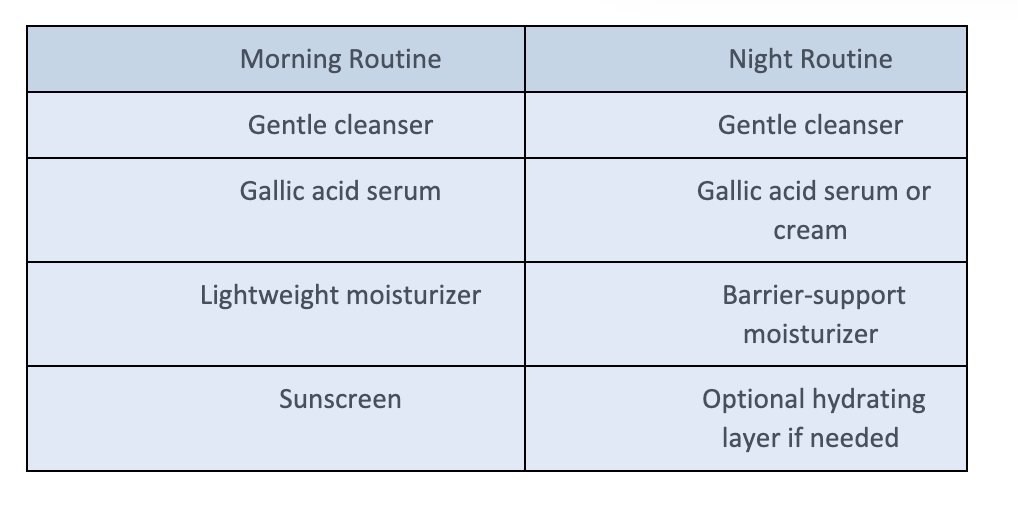
Another point that comes up is layering. Using too many active ingredients at once often leads to irritation. Sensitive skin responds better to fewer, consistent steps. Use the Cetaphil AI Skin Analysis Tool for personalized product recommendations based on your skin type. It helps identify visible concerns and suggests suitable options, making it easier to build a routine without unnecessary trial and error. This kind of approach helps reduce confusion and prevents overuse of products.
Conclusion
Skin deals with constant environmental pressure during the day and shifts into recovery mode at night. Supporting both phases usually works better than forcing aggressive treatment routines. Gallic acid in skincare fits into that balance because it helps protect stressed skin without creating additional irritation. Over time, the skin often feels calmer, more comfortable, and easier to manage. That steady improvement matters more for sensitive skin than fast results that disappear quickly. Simple routines, daily protection, hydration, and supportive ingredients usually create stronger long-term skin health than constantly changing products. Looking at skincare, this way can make routines feel less overwhelming and much easier to maintain.
FAQs

Yes, gallic acid can usually be used during both daytime and nighttime routines because it works gently without heavily disrupting the skin barrier. During the day, it supports protection against environmental stress. At night, it helps support recovery while fitting comfortably into simple skincare routines.
Gallic acid helps reduce oxidative stress linked to pollution, UV exposure, heat, and environmental irritation. It helps sensitive skin feel less reactive over time. Protection often appears gradually through reduced discomfort, calmer texture, and fewer visible signs of stress during the day.
At night, gallic acid supports the skin while it naturally repairs itself. It helps calm irritation that builds during the day and works well with hydrating products. Many people notice their skin feels more comfortable and balanced in the morning when nighttime routines stay gentle and consistent.