Gallic Acid Skincare Guide: Benefits for Every Skin Type
If you have spent even a few weeks paying attention to your skin, you probably already know this. It does not behave the same way every day. Some mornings it looks fine, almost clear. By evening, it feels dull, a bit tired, and sometimes irritating for no clear reason.
Living in India adds another layer to this. Heat, dust, humidity, long commutes, air conditioning. All of it shows up on your skin, even if you follow a routine. This is where many people feel stuck. They are doing something, but it does not feel like enough.
Skin does not always need stronger products. It often needs something that works quietly in the background. That is where gallic acid in skincare comes in. It does not feel aggressive. It does not try to change everything overnight. It simply helps protect skin from daily environmental stress and climate exposure.

What is Gallic Acid?
Gallic acid is a naturally occurring compound found in things like green tea, berries, and certain plants. In skincare, it is used mainly for its antioxidant properties. That sounds technical, but the idea is simple. Your skin deals with daily stress. Pollution, sunlight, indoor dryness, and even lack of sleep. Over time, all of this builds up. Gallic acid use helps reduce that impact. It does not act like harsh treatment. It works more like daily antioxidant support for the skin
If you look at it in practical terms, it helps with:
- Skin that looks dull by the end of the day
- Mild redness or irritation
- Uneven tone that comes and goes
- General tired appearance
It is not dramatic, and that is exactly why people stick to it.
Benefits of Gallic Acid for Different Skin Types
One thing that often complicates skincare is this. What works for one person does not always work for another. Skin type changes how products behave. The good part is that gallic acid benefits are not limited to one type of skin. It adapts quite well.
For oily skin, it helps without adding heaviness. That matters more than people think. Many products for oily skin end up making it feel dry or tight. Gallic acid does not do that. It keeps things balanced.
For dry skin, the focus shifts. It helps reduce dryness and that stretched, uncomfortable feeling. It works better when paired with a moisturizer, but on its own, it does not strip the skin.
Sensitive skin is where it becomes more noticeable. Many people with sensitive skin hesitate to try new ingredients. This one usually feels easier to manage. It does not trigger immediate discomfort that stronger actives sometimes do.
Combinational skin, which is quite common, benefits from that balance. It does not overcorrect either side. This comes up more often than expected. People are not always looking for transformation. They are looking for stability.
How to Incorporate Gallic Acid in Your Skincare Routine
People often overcomplicate skincare routines. More products do not always mean better results. Gallic acid works best inside routines that stay simple and consistent.
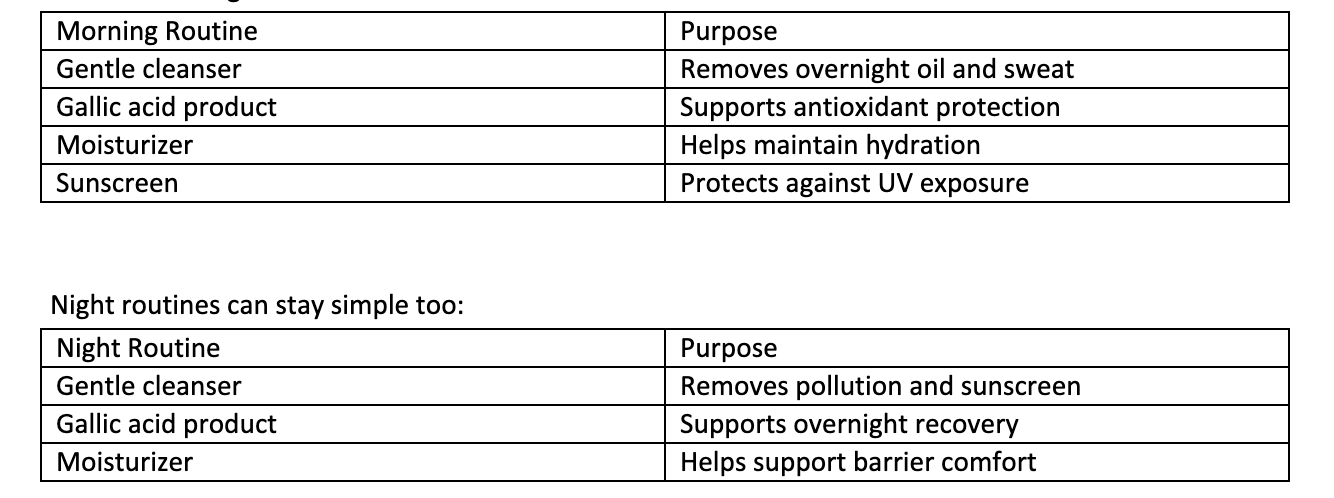
A basic morning routine can look like this:
Morning vs. Night: Best Time to Use Gallic Acid
People often ask this. Should it be used in the morning or at night? The answer is not fixed. It depends on how you prefer to build your routine. In the morning, gallic acid helps your skin deal with the day ahead. Pollution, sunlight, and dust. It acts as a layer of support. This works even better when paired with sunscreen.
And yes, sunscreen in winter still matters. Many skip it because the weather feels softer. But ultraviolet UV radiation and exposure do not stop. That damage adds slowly. At night, the role changes. Your skin starts to recover. It tries to reset everything it has gone through during the day.
Using gallic acid at night helps with:
- Reducing inflammation
- Supporting repair
- Reducing that tired look
Some people use it both times. That works as long as the rest of the routine stays simple.
How to Choose the Right Gallic Acid Product for Your Skin
This part often gets overlooked. The ingredients matter, but the product format matters just as much.
For oily skin, lighter textures feel more comfortable. Gel-based or fluid products tend to sit better on the skin.
For dry skin, something cream-based works better. It holds moisture and feels less tight. Sensitive skin benefits from minimal formulations. Fewer ingredients, less chance of irritation.
Combination skin needs a bit of adjustment. Some areas may need more hydration than others.
People sometimes switch products too quickly. That makes it hard to understand what is actually working. Staying consistent with one product for a while usually gives clearer results. Also, do not ignore the basics. Even with a good routine, skipping sunscreen in winter can affect results over time.
Conclusion
Skin rarely stays the same from one day to the next. Weather, stress, environment, all of them play a role. That is why simple routines often work better than complicated ones. Gallic acid use fits into this kind of approach. It supports the skin without pushing it too hard. Morning or night, it works quietly in the background. If you keep things simple and stay consistent, changes become easier to notice. Not overnight, but overtime. Looking through these points early can make the process easier when you apply.
FAQs

Yes, gallic acid is suitable for most skin types, including dry, oily, and sensitive skin. Its gentle nature supports daily care without irritation. Gallic acid benefits for skin include helping reduce inflammation and supporting everyday skin comfort, making it adaptable for daily skincare routines.
Yes, oily skin can use gallic acid for everyday use without concern. It helps manage excess oil while keeping the skin balanced. Unlike heavy ingredients, gallic acid use feels lightweight and does not clog pores or increase greasiness over time.
Gallic acid benefits for skin include reducing inflammation and visible redness. For sensitive skin, it works gently without causing discomfort. Regular gallic acid use helps skin feel more stable and less reactive to external stress.